


Last week I had the chance to see some old NYC food friends at F&F Restaurant and Bar in Carroll Gardens at a dinner hosted by Alison Roman and Victoria James, with the Franks themselves presiding. The menu featured “A Very Good Sauce”, Alison’s somewhat recently launched red sauce. The food, as expected, was divine.
I was a skeptic if not downright cynic when I first saw the announcement of A Very Good Sauce. Blame it on my years in the industry, but the pasta sauce shelf has become so crowded in a post-Rao’s / Campbell’s world, that I didn’t think we needed another.
I stand corrected.
Alison’s product is very good. The shallot anchovy is particularly special and the smaller jar (your typical Carbone or Prego is 24 oz. and Roman’s 16 oz.) is a thoughtful adjustment suited for most pasta-making occasions. It turns out I like this sauce a lot.
Even more so, I like what it acknowledges in the world of food influencers: we can’t do what you do every day, and we shouldn’t be expected to.
For well over a decade now, many content creators have carved out a specific aspirational niche, guidance and tips on how to keep your fridge looking perfect, meal prepping for the week, packing hidden veggies and protein into all of your meals - doled out by people who do this for a living. All day long. Get paid to do it.
I understand why the content is composed this way, intentionally aspirational. But I get the sense it may be impacting our relationship with meal time and how we prepare food more than people recognize. With the average person picking up their phone 205 times a day and 64% of Americans saying they look at screens over 5 hours a day, content and what we’re consuming at such high levels on a 24 hour cycle is taking its toll.
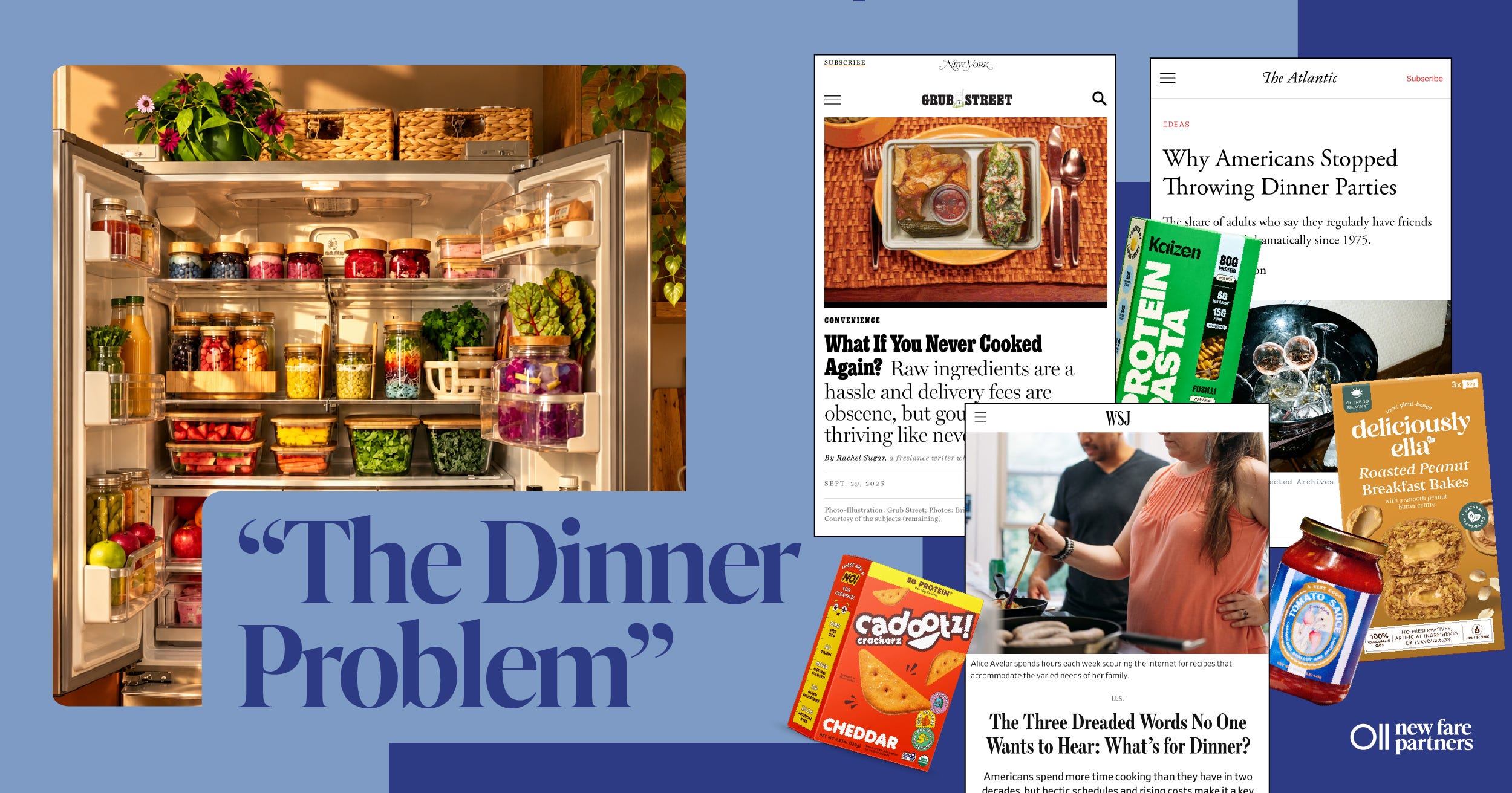
This phenomenon, anyone that has a sinking feeling in their stomachs at 5 o’clock, was recently dubbed “the dinner problem” in a spate of articles. Just in the last two weeks, there’s been the Wall Street Journal’s “Three Dreaded Words No One Wants to Hear: What’s for Dinner”, New York Magazine’s “What if you Never Cooked Dinner Again” and the Atlantic’s “Why Americans Stopped Throwing Dinner Parties”. All three of these pieces report on various issues we experience in modern life - lack of time, misaligned family schedules, food allergies and intolerances, and general malaise - affecting our ability to make dinner. Interestingly, there wasn’t much - if any - acknowledgement of the role that increased content and tech might play in our perceived crisis that is dinner every night.
Beyond the sheer amount of time spent with screens (guilty as charged) we’ve, with it, started to set a gold standard for meal preparation that didn’t exist so blatantly before. My hunch is that we’re consuming more food inspiration than we could possibly act on, while raising the bar for what an ordinary dinner is supposed to look like. Thus, “the dinner problem”.
As supper (the correct word for an evening meal according to my mother) presents itself as more of a challenge, there’s some good news. Many of these same figures are acknowledging where “normal” people (i.e. non-paid content creators) are in life. We’re moving in the direction of solutions, and several influencers are starting businesses that bring culinary solutions.
Alison Roman is one example. Arash Hashemi, better known as Shred Happens to his (5.4) million followers, is another. His content is built around high-protein, low-carb cooking, with recipes that are both ambitious and approachable. His company, Kaizen, makes high-protein, low-carb pasta and rice, effectively taking one of the more complicated parts of his cooking philosophy and putting it into a box on the shelf.
Deliciously Ella, the brand name behind UK wellness personality Ella Woodward, provides a variety of plant-based meals and meal solutions under a line called Plants. She offers recipes, videos and this group of products meant to offer the ultimate shortcut to foods that meet her philosophy around vegan meals.
Rachel Mansfield, a recipe developer, cookbook author and mother of three, is another. She was primed - through years of maternal knowledge and empathy - to build a compelling food business. Alongside her husband, Jordan Carpenter, and General Partner of Selva Ventures, Kiva Dickinson, she launched Cadootz, a line of organic crackers. If not a dinner solution, a pre-dinner hold over.
In some ways, these creators have an advantage over traditional food companies. They’ve spent years in a direct conversation with their consumers, seeing which recipes get saved, which ingredients are intimidating, which shortcuts adopted. They’ve also built enormous trust and, importantly, an audience that already associates them with a particular way of eating.
This is where I come back to Alison’s sauce. It doesn’t replace the act of cooking dinner. But it does make it easier. There’s something refreshing about a celebrated cook acknowledging that most of us don’t have the time, energy or desire to make a shallot-anchovy tomato sauce from scratch on a Tuesday night.
Save that for the feed.
We could not agree more. The need for whole, high quality ingredient packaged food is so real for busy families. Dinner is so hard AND we need better solutions for the other 4 eating occasions for us busy parents have to figure out...
(Why we've got our healthy muffins!)
I feel this same way about the launch of Riff, and even the agency coming to work on the municipal grocery stores - why can't high quality product and style be in the mainstream world?